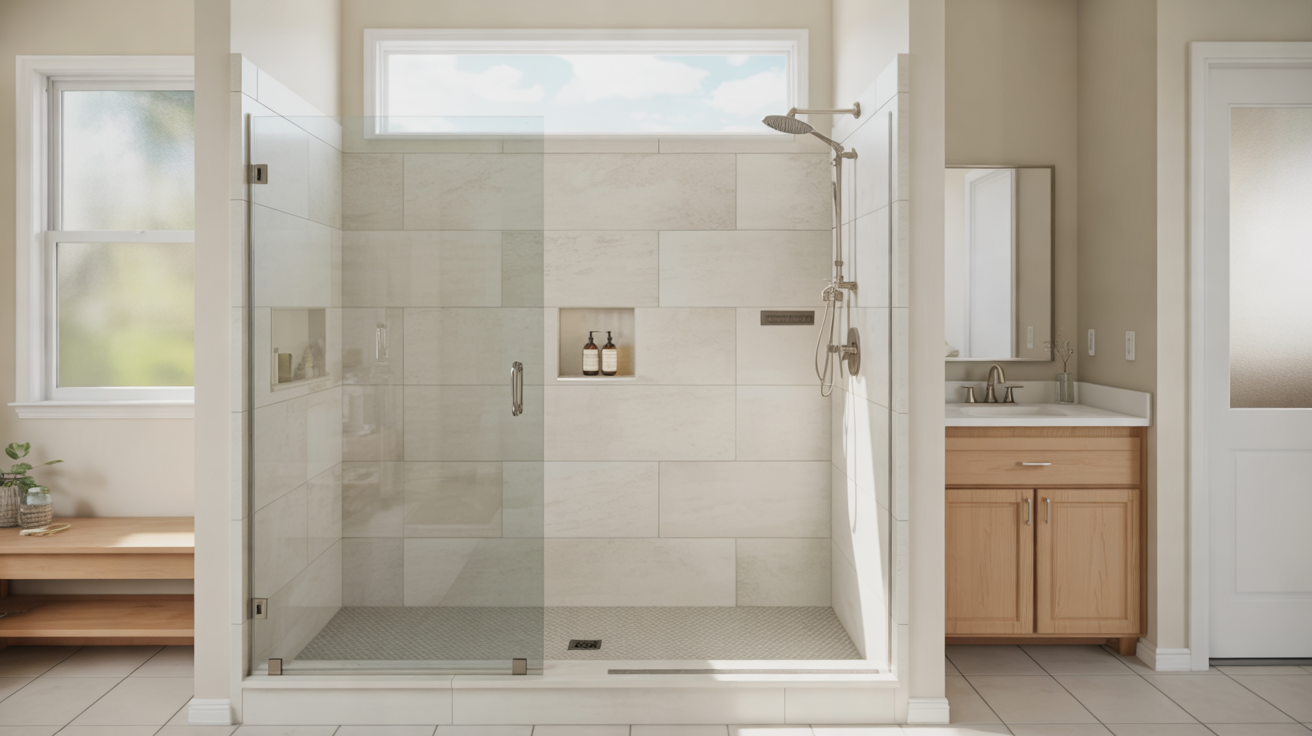
Choosing the right shower contractor can be the difference between a smooth, on-schedule remodel and a stressful project full of surprises. A good contractor will listen to your goals, give clear pricing, protect your home during work, and deliver a finished shower that looks great and functions safely.
This guide walks you through how to screen, compare, and select a shower contractor for your project so you can move forward with confidence.
Step 1: Define Your Shower Project Clearly
Before you call any contractors, get clear about what you want. Contractors can give much more accurate advice and pricing when you have a basic plan in mind.
Questions to ask yourself
- Are you replacing an existing shower with something similar, or changing the layout?
- Do you want a walk-in shower, tub-to-shower conversion, or a tub-shower combo?
- What materials do you prefer (tile, acrylic, solid surface panels, glass doors, etc.)?
- Do you need accessibility features such as grab bars, seating, or low thresholds?
- What is your realistic budget range?
For help exploring layouts and materials before you talk to contractors, you can read the detailed guides on types of shower systems, tile vs acrylic showers, and shower wall surrounds.
Step 2: Build a Shortlist of Shower Contractors
Once you know what you want, create a list of contractors who regularly handle shower and bathroom projects.
Where to look
- Local search results focused on shower or bathroom remodeling
- Neighborhood recommendation boards and word-of-mouth referrals
- Online business directories and review platforms
Look for companies that clearly mention shower replacement or bathroom remodeling in their services, not just general home repair.
Step 3: Pre-Screen Contractors Before an On-Site Visit
A quick phone call or email can save you time by filtering out poor fits before scheduling in-home estimates.
Key questions to ask early
- Do you specialize in shower or bathroom remodels, or is this only a small part of your work?
- Do you handle plumbing, waterproofing, and tile (if needed) in-house, or do you subcontract?
- What is your typical project size and price range for shower replacements?
- What is your approximate scheduling availability?
- Do you provide written estimates and written contracts?
If answers are vague, rushed, or inconsistent, that is usually a sign to keep looking.
For a deeper list of questions you can bring to this call or to your estimate visit, see the shower replacement questions checklist.
Step 4: Compare Experience and Specialization
Not all remodeling experience is equal. Shower projects involve water, plumbing, and waterproofing, so specific experience really matters.
What to look for
- Bathroom focus: Contractors who regularly handle showers, tubs, and bathroom updates are more familiar with common issues and best practices.
- Range of project types: Experience with tub-to-shower conversions, walk-in showers, accessibility upgrades, and waterproofing details.
- Knowledge of materials: Comfort working with tile, acrylic pans and walls, glass doors, and non-slip flooring.
You can also check how they talk about their approach to safety, accessibility, and layout in resources like walk-in shower replacement and senior-friendly shower upgrades.
Step 5: Evaluate Estimates, Pricing, and Scope
Once you have on-site visits, you should receive written estimates. Your goal is not only to compare prices, but also what is—and is not—included.
What a clear estimate should include
- Demolition details: what will be removed and how debris will be disposed of
- Plumbing work: moving drains, upgrading lines, or replacing valves
- Waterproofing system: type of membrane, backer board, pan or base
- Materials and finishes: fixtures, walls, flooring, doors, and hardware
- Labor and timelines: estimated start date, project duration, and work hours
Be cautious about estimates that are much lower than others without a clear explanation. They may be leaving out key steps like proper waterproofing or code-compliant plumbing.
For ballpark ranges before your estimate, the shower replacement cost guide and financing options pages provide helpful context.
Step 6: Ask About Timelines and Project Process
A trustworthy contractor should be able to explain how your project will flow from start to finish.
Clarify key details
- How long the project is expected to take, from demolition to final walkthrough
- What hours crews will be on-site and how your home will be protected
- Whether you will be without water or without use of the bathroom at any point
- Who your main contact is for questions or concerns during the job
To understand what a typical shower replacement looks like step by step, see the shower replacement process guide and the article on how to prepare for a shower replacement.
Step 7: Review Warranties and After-Care
Good contractors stand behind their work and help you keep your new shower in top shape.
Important points to confirm
- What is covered by the workmanship warranty and for how long
- What product warranties apply to the pan, walls, glass, and fixtures
- What voids the warranty (for example, harsh cleaners or drilling into tile)
- How to request service if an issue comes up after completion
You can learn more about typical coverage on the shower replacement warranties page, and how to keep your shower looking new in the cleaning and maintenance guide.
Step 8: Check Communication and Professionalism
How a contractor communicates before you sign is usually how they will behave during the project.
Positive signs
- Returns calls and emails promptly
- Shows up on time for appointments or gives advance notice if running late
- Explains technical details in plain language
- Provides written documentation rather than only verbal promises
If communication is confusing or disorganized early on, it often becomes worse once work starts.
Step 9: Understand DIY vs Professional Work
You may be wondering if you can handle some or all of the shower work yourself. For many homeowners, hiring a professional contractor is worth it for waterproofing, plumbing, and structural work alone.
The comparison of risks, costs, and results in DIY vs professional shower replacement can help you decide which tasks, if any, you want to attempt on your own and which are best left to a contractor.
Common Red Flags When Choosing a Shower Contractor
- Only offers verbal estimates, refuses to put details in writing
- Asks for full payment up front before work begins
- Cannot clearly explain how they waterproof the shower area
- Dodges questions about schedules, change orders, or warranties
- Pressures you to decide immediately or says the price is only good “today”
If several of these show up, it is usually safer to continue your search.
Putting It All Together
Choosing the right shower contractor is about more than the lowest price. When you take time to define your project, compare detailed estimates, ask the right questions, and look closely at communication and professionalism, you dramatically reduce the risk of problems during your remodel.
Once you have a contractor you trust, you can focus on the fun parts—selecting materials, features, and design details that fit your lifestyle. The blog at Shower Replacement Port St. Lucie offers inspiration on topics like luxury shower features, budget upgrades, and non-slip flooring to help you plan the shower that is right for you.
FAQs About Choosing a Shower Contractor
How many estimates should I get?
Most homeowners find that three detailed, in-home estimates are enough to compare pricing, scope, and approach. If two are similar and one is much higher or lower, use questions to understand why before deciding.
Should I choose the lowest bid?
Not automatically. A lower bid may reflect shortcuts in waterproofing, cheaper materials, or no allowance for hidden problems. Compare line items and ask each contractor to explain differences in scope.
What should be in the contract?
The contract should outline the scope of work, materials, payment schedule, estimated start and completion dates, change order process, and warranty terms. Do not sign anything you do not fully understand.
How can I avoid surprise costs?
Ask contractors what kinds of hidden issues they sometimes find behind old showers (such as rot, mold, or outdated plumbing) and how they handle those discoveries. A good contractor will explain potential scenarios and typical cost ranges in advance.
For more background on common issues and how professionals address them, see common shower replacement problems and how pros fix them.