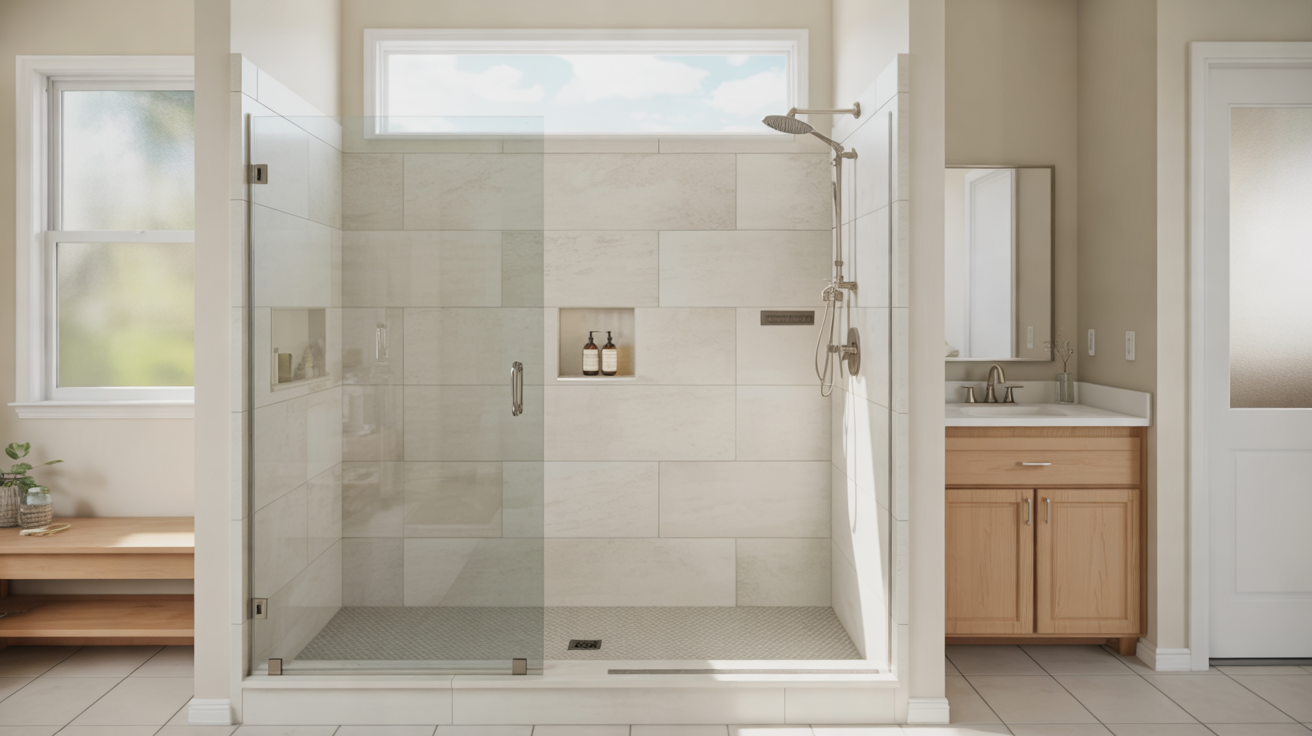
When you are planning a shower replacement, the materials you choose will determine how much scrubbing you do later. Some surfaces naturally resist mold, mildew, soap scum, and hard water buildup. Others look beautiful but demand constant sealing and deep cleaning. Understanding your options helps you design a shower that stays fresh with minimal effort.
This guide walks through the best low-maintenance shower materials, how they compare, and what to combine for a cleaner, healthier bathroom over the long term.
What Makes a Shower Material “Low Maintenance”?
In a wet environment, mold and mildew grow wherever moisture lingers. Low-maintenance materials are designed to limit those conditions.
Key characteristics to look for
- Non-porous surface – Water, soap, and body oils sit on top instead of soaking in, which helps prevent stains, mold, and odors.
- Minimal grout or seams – Grout lines and joints trap moisture. Larger panels or solid surfaces have fewer places for growth.
- Easy to wipe down – Smooth, durable finishes that tolerate gentle household cleaners make weekly maintenance quick.
- Strong water resistance – Materials that do not swell, warp, or delaminate when exposed to water reduce long-term issues behind the walls.
- Light or mid-tone colors – These make it easier to see soap scum or mold early, so you can wipe it away before it spreads.
Best Low-Maintenance Shower Wall Materials
The shower walls take the most direct spray, so choosing the right wall surround can dramatically reduce mold and cleaning time.
Acrylic shower surrounds
Acrylic is one of the most popular choices for easy-care showers. It is mold-resistant, non-porous, and available in many colors and patterns.
- Pros: Smooth surface, no grout lines, resists staining and chipping, lightweight, warm to the touch.
- Cons: Can scratch with abrasive pads or harsh cleaners; needs proper installation to avoid flexing or gaps.
- Best for: Busy households that want fast cleaning with simple soap-and-water or non-abrasive cleaner.
To learn more about how acrylic compares to other options, see Tile vs Acrylic Showers: Which Is Better for Your Bathroom?
Solid surface wall panels
Solid surface panels are made from a blend of resins and minerals. They are heavy, durable, and typically installed as large sheets with very few seams.
- Pros: Non-porous, highly stain-resistant, low seams, often repairable if scratched, upscale appearance.
- Cons: Higher cost than basic acrylic, requires professional installation due to weight and cutting.
- Best for: Homeowners wanting a high-end look with less maintenance than natural stone.
Fiberglass shower surrounds
Fiberglass units are often installed as one-piece or multi-piece kits. They are similar to acrylic in care, though typically at a lower price point.
- Pros: Lightweight, budget-friendly, few seams, relatively easy to clean.
- Cons: More prone to dulling, scratching, and discoloration over time than acrylic or solid surface.
- Best for: Rental properties or secondary bathrooms where low initial cost and easy cleaning are priorities.
Large-format porcelain or ceramic tiles
Tile can still be low maintenance if you choose it carefully. The tile itself is non-porous when glazed; the main concern is grout.
- Pros: Durable, many styles, resistant to water and staining.
- Cons: Grout attracts mildew and soap scum; requires sealing and more detailed cleaning.
- Best for: Homeowners who want a tiled look and are willing to keep up with grout maintenance.
To make tile as low-maintenance as possible, choose large-format tiles (fewer grout lines) and high-quality grout with a mold-resistant additive.
Materials to avoid if you want less scrubbing
- Unsealed natural stone – Beautiful but highly porous; requires regular sealing and special cleaners.
- Textured surfaces with deep grooves – Attractive, but those grooves hold soap scum and mildew.
- Cheap laminate panels – If water gets behind seams, mold can grow out of sight.
For a broader comparison of wall options, you can also read Shower Wall Surrounds: Solid Surface, Panels and Tile Compared.
Low-Maintenance Shower Floors That Resist Mold
The shower floor deals with pooling water, soap, and shampoo residue, making it a common spot for mold. Choosing the right base keeps cleaning manageable.
Acrylic or fiberglass shower bases
Factory-made pans in acrylic or fiberglass offer a smooth, slightly sloped surface that drains well.
- Pros: One continuous surface with no grout, good drainage, easy to wipe, budget-friendly options.
- Cons: Can feel more flexible underfoot in cheaper models; abrasive cleaners may dull the finish.
Solid surface pans
Solid surface shower bases pair well with matching wall panels for a streamlined, minimal-seam design.
- Pros: Non-porous, durable, customizable sizes and shapes, modern look.
- Cons: Heavier and more expensive than acrylic, typically requires pro installation.
Large-format tile with epoxy or high-performance grout
For homeowners who want a tiled floor, using larger tiles and advanced grout products can reduce maintenance.
- Pros: Customizable appearance, good slip-resistance options, works well for custom-sized showers.
- Cons: More grout than a solid pan; requires detailed cleaning, especially around the drain.
If safety is a concern, see Non-Slip Shower Flooring Options for Safer Bathrooms for surface choices that balance traction and easy cleaning.
Glass, Doors, and Hardware: Reducing Mold Hotspots
Shower doors, curtains, and hardware also affect how much mold you see and how often you need to clean.
Shower glass vs curtains
Glass doors create a more sealed environment and are easier to squeegee, while curtains can stay damp and harbor mildew.
- Frameless or semi-frameless glass: Fewer metal tracks where water and soap collect, and smoother surfaces to wipe down.
- Coated glass: Some glass can be treated with protective coatings that resist water spots and soap film.
- Shower curtains: Mildew-resistant liners help, but curtains generally need more frequent washing or replacement.
For a closer look at upkeep and cost, see Glass Shower Doors vs Shower Curtains: Cost and Maintenance.
Mold-resistant caulk and grout
Even with the best materials, the products used to seal edges and joints make a big difference.
- Ask for 100% silicone caulk with a mold- and mildew-resistant formula at all wet joints.
- Consider epoxy grout or other high-performance grout in tiled areas to reduce staining and water absorption.
- Ensure all corners, around niches, and along the floor are properly sealed to keep water out of hidden spaces.
Design Choices That Help Prevent Mold and Mildew
Beyond materials, your shower layout and ventilation also influence mold growth.
- Good slope to the floor: Standing water is mold’s best friend. Make sure the base is sloped correctly toward the drain.
- Built-in niches instead of corner caddies: Properly waterproofed niches collect less water and are easier to wipe than multi-level racks.
- Avoid deep ledges: Keep shelves and sills slightly pitched so water runs off instead of pooling.
- Strong exhaust fan: Pair your shower upgrades with a good ventilation fan to remove moisture from the air.
- Simple layouts: Fewer tight corners and decorative ridges mean fewer places for mold to hide.
For more ideas that balance real-world use with easy cleaning, visit Family-Friendly Shower Designs for Busy Households.
Simple Cleaning Habits for Long-Lasting Results
Even low-maintenance materials need light care. Fortunately, a few quick habits go a long way.
- Rinse after use: A 30-second rinse of the walls and floor removes leftover soap and shampoo.
- Squeegee the glass: A fast wipe-down dramatically cuts water spots and soap film.
- Use gentle cleaners: Non-abrasive, non-bleach products are usually enough on non-porous surfaces.
- Check caulk and grout: Look for cracking or gaps and address them early to prevent hidden moisture.
- Run the fan: Keep the bathroom fan on during showers and at least 15–20 minutes afterward.
For more detailed upkeep tips, you can read How to Clean and Maintain Your New Shower for Long-Lasting Results.
FAQs About Mold-Resistant, Low-Maintenance Showers
Do I have to avoid tile completely to reduce mold?
No. Tile itself is often easy to keep clean, especially glazed ceramic or porcelain. The challenge is grout. If you choose tile, use larger tiles to cut down on grout lines and ask your installer about mold-resistant or epoxy grout for better long-term performance.
Can I put a new acrylic or solid surface surround over my old tile?
Sometimes, but only if the existing walls are solid, dry, and structurally sound. Many professionals prefer to remove old materials to check for hidden moisture or damage. That helps prevent mold issues behind the new surround.
What is the easiest shower material to keep clean overall?
For most homeowners, a combination of an acrylic or solid surface shower base and matching wall panels, paired with frameless glass doors, offers the lowest day-to-day maintenance and strongest resistance to mold and mildew.
How do I make sure my new shower is properly waterproofed?
Professional installation is important. Proper backing boards, waterproof membranes, sealed seams, and correctly sloped floors all work together. To understand what to expect from a pro, visit Common Shower Replacement Problems and How Pros Fix Them and Checklist: Questions to Ask Before Booking a Shower Replacement.
Where can I learn more before planning a shower replacement?
The blog at Shower Replacement Port St. Lucie covers costs, materials, and design options in detail, including Shower Replacement Cost Guide: Pricing Breakdown and Budget Tips and DIY vs Professional Shower Replacement: Risks, Costs and Results.