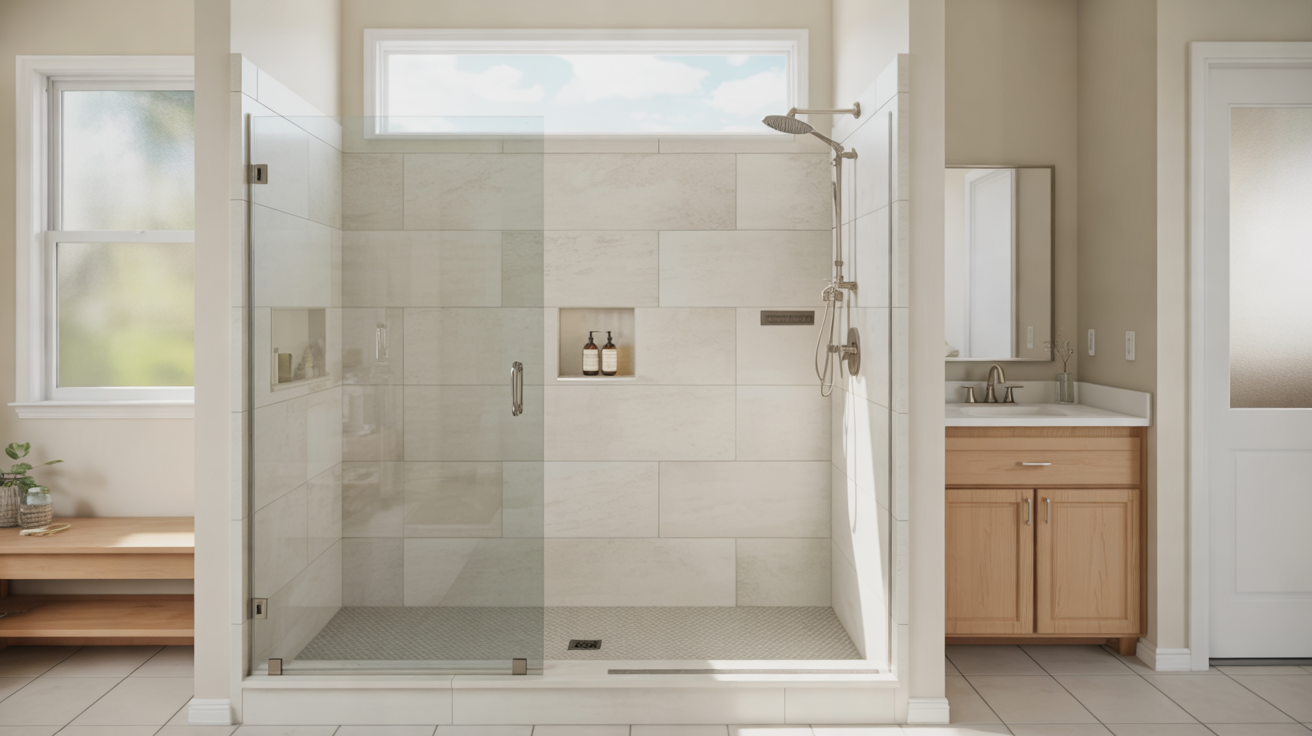
Slippery shower floors are one of the most common causes of bathroom injuries, especially for kids, older adults, and anyone with limited mobility. Choosing the right non-slip shower flooring can dramatically reduce your risk of falls while still looking clean and modern. This guide walks through the safest options, how they compare, and what to consider if you are planning a shower replacement.
Main Types of Non-Slip Shower Flooring
Non-slip performance comes from a mix of material, texture, and proper installation. Below are the most common options homeowners consider during a shower remodel.
1. Textured Acrylic Shower Bases
Acrylic shower pans (or bases) are popular in modern replacements because they are lightweight, durable, and easy to clean. For safety, you want a pan with an integrated textured surface.
Pros:
- Factory-molded texture that stays consistent across the floor.
- Warm underfoot compared with tile or stone.
- Few seams, which means less grout and less mold risk.
- Many styles designed to meet slip-resistance standards.
Cons:
- Can be scratched by abrasive cleaners or harsh scrubbing pads.
- Must be installed on a properly prepared base to avoid flexing or squeaks.
Textured acrylic bases work well for most families, especially in walk-in shower replacements where safety and fast installation are priorities.
2. Small Porcelain or Ceramic Shower Tile
Tile remains a classic choice, but not every tile is safe for a shower floor. Large glossy tiles become extremely slippery when wet. For better traction, contractors typically use small tiles with more grout lines and slip-rated finishes.
Best tile sizes for traction:
- Mosaics: 1" x 1", 2" x 2" sheets
- Smaller formats: up to about 4" x 4"
Pros:
- Excellent grip from both texture and numerous grout joints.
- Huge range of styles, colors, and patterns.
- Works well in custom-sized or oddly shaped showers.
Cons:
- More grout to clean and maintain over time.
- Improper tile choice (too smooth) can still be slippery.
- Requires a skilled installer for correct slope and waterproofing.
3. Textured Solid-Surface Shower Bases
Solid-surface bases are made from engineered materials that feel similar to stone but are non-porous. Many come with a molded, non-slip texture.
Pros:
- Very low maintenance; no grout lines on the floor.
- Non-porous surface resists staining and mold growth.
- Often available in stone-look finishes for a modern, upscale feel.
Cons:
- Usually higher upfront cost than basic acrylic.
- Heavy, which may require extra preparation of the subfloor.
4. Textured Fiberglass Shower Pans
Fiberglass bases are often found in older homes and builder-grade units. Newer versions may include improved textures for better slip resistance.
Pros:
- Lightweight and relatively affordable.
- Factory-textured for some level of grip.
Cons:
- Can dull or wear down over time, reducing traction.
- More prone to scratching and staining than acrylic or solid-surface.
5. Pebble or River Rock Tile Floors
Pebble floors use natural or manufactured stones set into mortar, creating a highly textured surface.
Pros:
- Very tactile surface that can feel like a foot massage.
- Rustic, spa-like appearance that adds visual interest.
Cons:
- Lots of grout to clean, which may trap soap and minerals.
- Can feel uneven or uncomfortable for some users.
- Requires careful installation to maintain proper drainage.
How to Compare Non-Slip Flooring Options
When you are choosing a new shower floor, think beyond appearance. Safety, comfort, and maintenance should all factor into your decision.
Slip Resistance Ratings (COF)
Many flooring products list a coefficient of friction (COF) rating. Higher numbers mean more traction. For wet environments like shower floors, look for products that specifically mention slip resistance or are tested for wet areas.
Comfort Underfoot
Some highly textured surfaces offer great traction but can feel rough on bare feet. If anyone in your household has sensitive feet or balance issues, you may want a moderate texture combined with other safety features like grab bars and seating. For more details on accessibility, see Senior-Friendly Shower Upgrades.
Cleaning and Maintenance
Grout lines and deep textures tend to collect soap scum and minerals more quickly. If you prefer low maintenance, consider:
- Textured acrylic or solid-surface bases with minimal seams.
- Smaller tiles with stain-resistant grout.
For upkeep tips once your new shower is installed, visit How to Clean and Maintain Your New Shower.
Durability and Lifespan
Non-slip textures should hold up over years of use. Choose products from reputable manufacturers and have them installed correctly to avoid flexing, cracks, or worn spots that can become slick.
Additional Ways to Improve Shower Floor Safety
The floor material is your first line of defense, but you can increase safety with a few extra upgrades, especially during a shower replacement project.
Built-In or Fold-Down Seating
A seat or bench lets users rest while showering and reduces the risk of slips that occur when bending or balancing on one leg. Built-in seating is often added in walk-in shower designs. For inspiration, see Family-Friendly Shower Designs.
Grab Bars and Handheld Showerheads
Grab bars give you something secure to hold when stepping in or out of the shower or when turning around on a wet surface. Pairing them with a handheld showerhead makes it easier to wash while seated and reduces awkward movements.
Proper Drainage and Slope
Even a textured surface can become slick if water puddles. A professional installer will ensure the shower floor slopes correctly toward the drain so water moves away quickly, reducing standing water and soap buildup. You can learn more in Shower Drain and Plumbing Upgrades to Do During Replacement.
Lighting and Visibility
Dim bathrooms make hazards harder to spot. Good overhead and task lighting help you see the floor clearly, especially for users with reduced vision. Explore more ideas in Shower Lighting and Ventilation Upgrades During Replacement.
When to Replace vs. Improve Your Existing Shower Floor
If you are not ready for a full shower replacement, there are still steps you can take to improve safety, but they may be temporary.
- Non-slip mats or stickers: Affordable and easy to install, but can shift, discolor, or become less effective over time.
- Anti-slip coatings: Clear coatings brushed or rolled onto existing surfaces; results depend heavily on preparation and product quality.
- Professional replacement: Best long-term option for older, cracked, or poorly sloped floors and for creating a fully accessible walk-in shower.
If you are considering a broader remodel, pages like Tile vs Acrylic Showers and Walk-In Shower Replacement can help you decide what type of system fits your goals and budget.
Practical Steps for Choosing a Safer Shower Floor
- Assess who uses the shower. Consider age, mobility, balance, and comfort levels. Households with children, older adults, or anyone with mobility concerns will benefit from higher-traction surfaces and added safety features.
- Decide on your maintenance tolerance. If you prefer quick cleaning and minimal scrubbing, lean toward acrylic or solid-surface bases rather than heavily grouted or highly textured stone.
- Set a realistic budget. Get a rough idea of costs with the Shower Replacement Cost Guide, then decide what you can comfortably invest in long-term safety.
- Talk with a shower specialist. A professional can walk you through product options, slip ratings, and layout changes that improve both safety and appearance. For help choosing an installer, see How to Choose the Right Shower Contractor.
- Plan the full upgrade. Think about flooring, grab bars, seating, doors or curtains, and drainage together so the finished shower works as a cohesive, safe system.
FAQs About Non-Slip Shower Flooring
Are textured shower floors harder to clean?
Some highly textured or pebble-style floors can require more effort to scrub. Many modern acrylic and solid-surface bases are designed with subtle textures that balance traction and cleanability. Using the right cleaning products and routine maintenance, as outlined in How to Clean and Maintain Your New Shower, helps keep any surface in good condition.
Can I make my existing smooth shower floor non-slip?
Yes, temporary options like non-slip mats, adhesive strips, or clear coatings can improve traction on a smooth floor. However, if your base is cracked, worn, or poorly sloped, it is usually better to plan a professional replacement for a more reliable, long-lasting solution.
What is the safest type of shower floor for seniors?
For many older adults, a low- or zero-threshold walk-in shower with a textured acrylic or solid-surface base, built-in seating, and well-placed grab bars offers the best combination of traction, comfort, and accessibility. You can read more ideas in Senior-Friendly Shower Upgrades.
Should I choose glass doors or a curtain with a non-slip floor?
Both can work safely if they are installed and used correctly. Glass doors can provide a solid surface to steady yourself, while curtains are lighter and easier to move. Your choice may depend on space, budget, and maintenance preferences. For a deeper comparison, visit Glass Shower Doors vs Shower Curtains.
A safe, slip-resistant shower floor is one of the smartest bathroom upgrades you can make. Whether you prefer the clean look of a textured base or the design flexibility of tile, planning ahead and choosing the right materials will help you enjoy a more comfortable, confident shower experience for years to come.