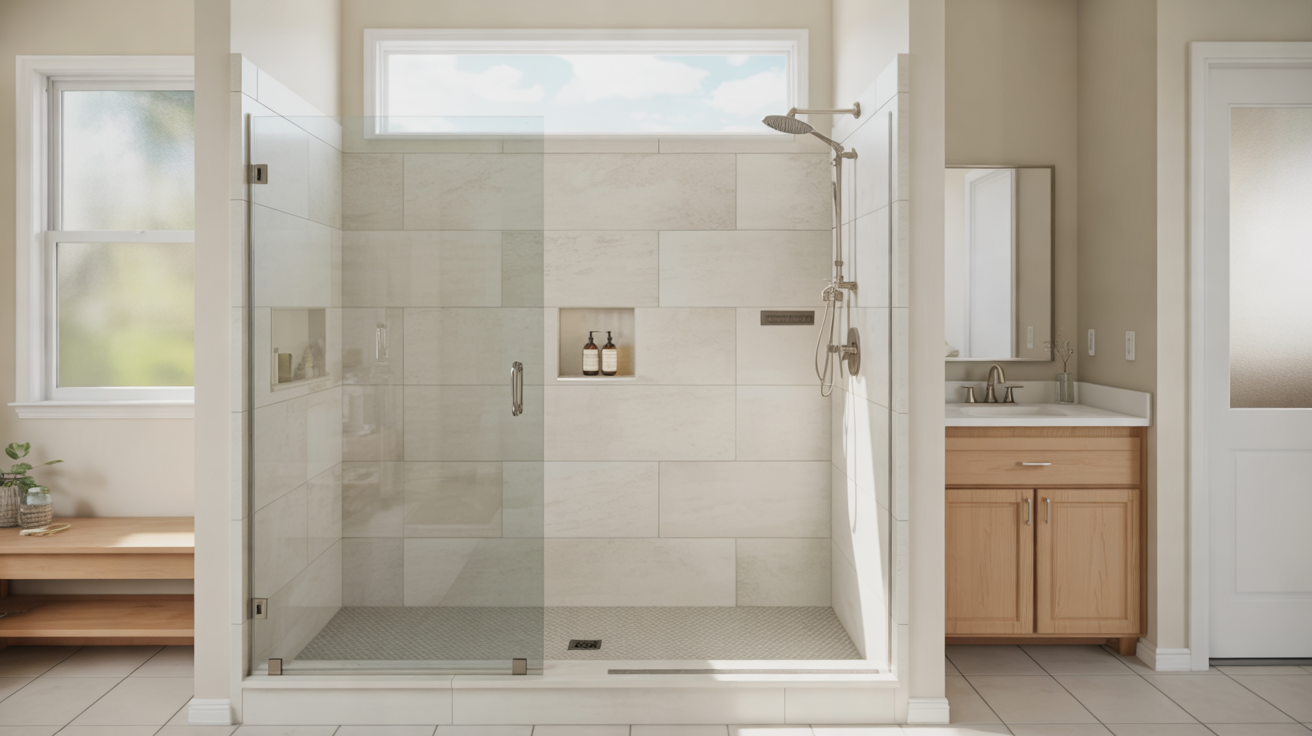
Upgrading lighting and ventilation while you replace your shower is one of the smartest ways to make your bathroom safer, more comfortable, and easier to maintain. Because the walls and ceiling are already open, it’s the ideal time to add new fixtures, wiring, and ductwork without extra demolition later.
This page walks through the options, safety basics, and practical decisions to help you plan lighting and fan upgrades as part of your shower replacement project.
Why Combine Lighting and Ventilation with Shower Replacement?
When you’re already replacing a shower, your contractor has access to framing, plumbing, and electrical runs. That makes it easier and more cost-effective to:
- Add or move ceiling and wall lights
- Install in-shower rated fixtures for better visibility
- Run new wiring for dedicated fan and light switches
- Upgrade to a quieter, more powerful exhaust fan
- Vent moisture outside correctly to help prevent mold
Good lighting reduces slips and missed steps. Proper ventilation helps protect grout, caulk, paint, and framing from long-term moisture damage, especially in bathrooms that see daily use.
Types of Shower Lighting to Consider
Modern shower lighting can be subtle and low-maintenance, or bold and decorative. The key is choosing fixtures that are rated for damp or wet locations in and around the shower.
1. Recessed Shower Lights
Recessed or “can” lights are a popular choice directly over the shower area.
- Wet-location rated trims: Required for fixtures installed above the shower.
- LED options: Run cooler, last longer, and save energy.
- Low profile: Works well with low ceilings or compact bathrooms.
2. General Ceiling Lights
In addition to in-shower lighting, a central ceiling fixture or set of recessed lights can brighten the whole bathroom.
- Helps balance shadows from vanity lights
- Makes cleaning easier because you can see soap scum and buildup
- Can be matched to your fan or trim style for a cohesive look
3. Accent and Task Lighting
If you’re doing a more custom shower, you may want to layer in extra lighting:
- LED strip lights in niches or along benches (installed to meet moisture and electrical codes)
- Wall sconces near the shower entry for softer, spa-like light
- Vanity lighting that coordinates with new shower fixtures and finishes
4. Dimmers and Lighting Controls
Upgrading controls is a small step that adds real comfort:
- Dim lights for a relaxing evening shower
- Use brighter settings for cleaning or shaving
- Separate switches for fan and lights so you can run ventilation without extra brightness
Ventilation: Exhaust Fan Basics
A good exhaust fan removes humid air quickly, reduces foggy mirrors, and helps prevent mold growth in corners and grout lines.
How Much Fan Power Do You Need?
Fan power is measured in CFM (cubic feet per minute). A common rule of thumb is at least 1 CFM per square foot of bathroom floor space, with adjustments for layout and ceiling height.
- Small bathrooms (up to ~80 sq ft): 80–100 CFM
- Medium bathrooms: 100–130 CFM
- Larger or multi-fixture bathrooms: higher CFM or multiple fans
Noise Levels (Sones)
Fan noise is rated in sones. Lower numbers mean quieter fans:
- 1.5 sones or less: Very quiet, good for everyday use
- 2–3 sones: Moderate noise, common in many homes
During replacement, many homeowners choose a quieter model since the fan is being swapped anyway.
Vent Routing Matters
Proper venting is just as important as fan size:
- Fans should vent outside, not into the attic or crawlspace
- Short, straight duct runs improve performance
- Insulated ductwork helps reduce condensation in colder spaces
With walls and ceilings open for the new shower, it’s the right time to correct any old or improper vent routes.
Upgrade Options: Fan Features and Combinations
Modern fans often combine multiple functions in one unit, which can simplify installation in a compact bathroom.
Fan + Light Combos
These units include an exhaust fan with an integrated light or multiple light sources.
- Saves ceiling space in small bathrooms
- Often designed to match common trim finishes
- Can be wired to one or two switches for separate control
Humidity and Motion Sensors
Smart controls can keep your bathroom dry without you having to think about it:
- Humidity-sensing fans turn on automatically when moisture rises
- Motion sensors activate lights or fans when someone enters
- Timers keep the fan running after a shower to clear humidity
Energy-Efficient Fans
Energy-efficient models use less electricity and may qualify for rebates in some areas. Pairing an efficient fan with LED lighting can lower your bathroom’s overall energy use.
Safety and Code Considerations
Any time you upgrade electrical or ventilation, safety and local building codes must come first.
- Use wet-rated fixtures and trims inside the shower area
- Make sure all electrical work is properly grounded and GFCI protected
- Confirm the fan is sized and ducted according to local code
- Use fixtures and fans rated for the location (ceiling, wall, or in-shower)
Working with a qualified shower contractor helps ensure these details are handled correctly. For guidance on choosing a pro, see How to Choose the Right Shower Contractor for Your Project.
Planning Your Lighting and Ventilation with the New Shower Layout
As you design your replacement shower, think through how lighting and ventilation align with the new layout.
- Review your floor plan. Note the location of the new showerhead, glass panels, niches, and seating.
- Decide where light is most needed. Over the shower, at the entrance, and near storage areas are common choices.
- Choose fixture styles. Match fixtures with your overall bathroom finish choices (chrome, brushed nickel, black, etc.).
- Coordinate with other upgrades. If you’re adding features like grab bars or seating, make sure they are well lit. For ideas, visit Senior-Friendly Shower Upgrades or Family-Friendly Shower Designs.
- Discuss controls. Clarify where you want switches, dimmers, and fan controls located.
If you are planning a full replacement, it may also help to review the Step-by-Step Shower Replacement Process so you know when lighting and fan installation typically occurs.
Common Mistakes to Avoid
- Relying only on vanity lights: These often leave the shower dim and shadowy.
- Keeping an undersized or noisy fan: If you already have the ceiling open, it usually makes sense to upgrade.
- Venting into the attic: This can cause moisture issues elsewhere in the home.
- Skipping a switch or timer: Without convenient controls, fans are less likely to be used long enough to clear humidity.
- Not planning around glass: Clear glass showers show more shadows; thoughtful lighting can help the entire shower feel brighter and larger. For more on glass vs curtains, see Glass Shower Doors vs Shower Curtains.
FAQs About Lighting and Ventilation Upgrades
Do I really need a separate light in the shower?
You don’t have to, but most homeowners prefer it. A dedicated shower light reduces shadows, makes the space feel bigger, and improves safety when stepping in and out, especially in walk-in showers.
Can I install a fan directly above the shower?
Yes, many fans are rated for use above a shower when they are on a GFCI-protected circuit and installed per the manufacturer’s instructions and local code. Always confirm the fan’s rating before installation.
How long should I run the exhaust fan after a shower?
Typically 15–20 minutes is recommended to remove lingering humidity. A timer switch or humidity-sensing fan can automate this so you don’t have to remember to turn it off later.
Will better ventilation help prevent mold in my new shower?
Improved ventilation won’t eliminate all cleaning needs, but it can significantly reduce persistent dampness that encourages mold and mildew. Pairing good ventilation with low-maintenance shower materials can make the new shower easier to keep clean.
Is it worth upgrading lighting and ventilation if I’m on a budget?
Often, yes. Because access is already open during shower replacement, the additional labor can be lower than doing it later as a separate project. If you’re budgeting carefully, take a look at Budget Shower Upgrades: Affordable Ways to Refresh Your Shower for more cost-conscious ideas.
Next Steps for Your Shower Replacement Project
When you plan your shower replacement, include lighting and ventilation on your checklist from the start. Clarify priorities, gather a few example photos, and talk with your contractor about fixture options and any electrical or venting updates that may be needed.
For help organizing the rest of your project questions, you may find our Shower Replacement Questions Checklist and Shower Replacement FAQs useful as you plan.