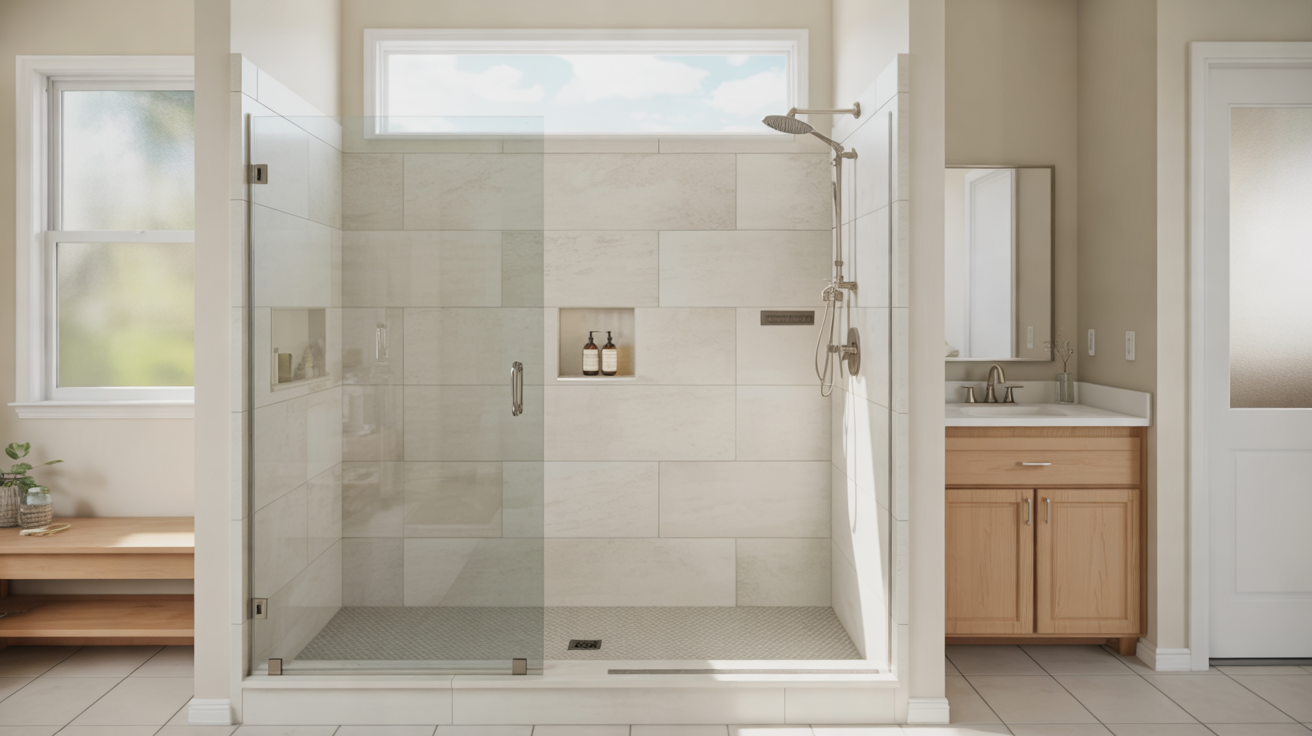
Choosing between a walk-in shower and a tub-shower combo affects how your bathroom looks, functions, and feels every day. The right choice depends on your space, mobility needs, budget, and how long you plan to stay in your home.
Below, you’ll find a side-by-side comparison of pros, cons, and typical costs to help you decide which option fits your next shower replacement project.
Quick Comparison: Walk-In Shower vs Tub-Shower Combo
| Feature | Walk-In Shower | Tub-Shower Combo |
|---|---|---|
| Accessibility | Best for mobility and aging-in-place | Higher step-over; less accessible |
| Daily Convenience | Fast, easy in-and-out for showers | Good for families who need a tub |
| Resale Appeal | Strong if at least one tub exists in home | Strong for buyers with kids or pets |
| Space Feel | Opens up small bathrooms | Can make room feel more enclosed |
| Cost Range* | Generally similar; varies by materials and plumbing | Similar; basic combos can be more budget-friendly |
| Best For | Safety, modern style, low maintenance | Bathing children, multi-use households |
*For specific budget guidance, see the Shower Replacement Cost Guide.
Walk-In Showers: Pros, Cons and Costs
Advantages of a Walk-In Shower
- Improved safety and accessibility
Walk-in showers remove the high tub wall, replacing it with a low curb or even a curbless entry. This makes it easier for older adults, people with mobility issues, or anyone recovering from an injury to get in and out safely. For more safety ideas, explore senior-friendly shower upgrades. - Modern, open look
Glass doors and streamlined walls make a bathroom feel larger and brighter. A walk-in shower can turn a dated bathroom into a more spa-like space, especially when paired with luxury shower features like rainfall heads or built-in niches. - Easier to clean
Fewer curves and corners mean fewer spots for soap scum and mildew to collect. Many homeowners choose low-maintenance materials like acrylic panels or large-format tile; you can compare options in low-maintenance shower materials and shower wall surrounds. - Better use of small bathrooms
Replacing a bulky tub with a walk-in shower can free up floor space, especially in tight layouts. For small spaces, see small bathroom shower ideas. - Customizable design
From bench seating and niches to multiple shower heads, walk-in showers are flexible. They can be tailored to how you actually shower, not just how the tub happened to be installed originally.
Potential Drawbacks of a Walk-In Shower
- No place to soak
If you enjoy baths to relax or soothe muscles, a shower-only bathroom can feel limiting. Many homeowners keep at least one tub elsewhere in the home. - Families may miss the tub
Bathing young children or pets is generally easier in a tub. If it’s your only bathroom, think carefully about everyday routines. - Water containment needs attention
Poorly designed walk-in showers can splash water onto the floor. Proper slope, door selection, and drainage are important. Learn more in the common shower replacement problems guide.
Cost Considerations for Walk-In Showers
The cost of a walk-in shower varies based on:
- Size and layout (simple alcove vs. expanded footprint)
- Materials (tile vs. acrylic vs. solid surface)
- Glass type (framed, semi-frameless, frameless)
- Plumbing changes or drain relocation
- Added features like benches, niches, or grab bars
Walk-in showers can cost more than a basic tub-shower combo if you opt for custom tile or high-end glass. However, a straightforward replacement using standard components may be similar in price to a tub-shower, especially when you avoid major plumbing moves. For a deeper breakdown and budgeting tips, see the Shower Replacement Cost Guide and shower remodel financing options.
Tub-Shower Combos: Pros, Cons and Costs
Advantages of a Tub-Shower Combo
- Two functions in one
You can take a quick shower or a long soak without needing separate fixtures. This is helpful for smaller homes that don’t have room for both a separate tub and shower. - Family- and pet-friendly
Tubs make it easier to bathe children and can be handy for washing larger pets or soaking items. - Appealing to a wide range of buyers
Many buyers like to see at least one full tub in the home. A tub-shower combo in a hall bath can be a smart resale decision. - Potentially lower material cost
Prefabricated tub-shower units and basic surrounds can sometimes be more budget-friendly than a fully custom walk-in shower, particularly if you keep the existing plumbing in place.
Potential Drawbacks of a Tub-Shower Combo
- Higher step-over
Stepping over a tub wall can be difficult or unsafe for those with balance or mobility challenges. This can become a concern as you or your family members age. - More to clean
Curves, ledges, and shower curtains can collect more soap scum and mildew. Materials and design choices make a difference; learn more in low-maintenance shower materials and glass shower doors vs shower curtains. - Can feel cramped
Most alcove tub-shower combos are narrower inside than a walk-in shower. If you want a spacious, open feel, a tub-shower may not deliver it.
Cost Considerations for Tub-Shower Combos
Costs depend on:
- Type of tub (standard alcove, deeper soaking tub, or higher-end models)
- Surround material (one-piece unit, multi-piece acrylic, or tile)
- Condition of existing plumbing and subfloor
- Choice of fixtures and accessories
A basic alcove tub with a prefabricated surround is often one of the more budget-conscious ways to refresh a bathroom, especially when you leave the layout as-is. If you’re looking for savings, check out budget shower upgrades.
Which Is Better for Resale Value?
Value depends on your local market and how many bathrooms your home has, but some general guidelines apply:
- At least one tub in the home helps resale, particularly for families with children or buyers who enjoy soaking.
- Primary bathroom: A walk-in shower is often seen as an upgrade, especially with quality materials and thoughtful design.
- Hall or kids’ bathroom: A tub-shower combo is typically more practical and expected.
If you’re converting a tub to a shower, the guide on tub-to-shower conversion explains what to expect and how it can affect your home’s appeal.
Practical Steps to Decide Between a Walk-In Shower and a Tub-Shower
- Look at who uses the bathroom
If it’s mostly adults and older users, a walk-in shower may be ideal. If you have small children or frequent kid visitors, a tub-shower might be more convenient. - Consider mobility and future needs
Think about aging in place, injuries, or mobility challenges. Many homeowners choose a walk-in for long-term safety. For ideas, see senior-friendly shower upgrades and non-slip flooring options. - Assess your existing layout
In some bathrooms, a walk-in shower fits naturally into the current alcove. In others, keeping a tub may save on plumbing and wall changes. The step-by-step shower replacement process article explains how pros evaluate your space. - Set a realistic budget
Decide how much you want to invest now and whether you’re comfortable with financing. Use the cost guide and financing options to narrow choices. - Think about maintenance
If you want to spend as little time as possible scrubbing, prioritize simple lines, durable wall panels, and good ventilation. See how to maintain your new shower and lighting and ventilation upgrades.
Talking through these points with a professional can help you choose the setup that best matches your home and lifestyle. For tips on choosing an installer, read how to choose the right shower contractor and the shower replacement questions checklist.
FAQs: Walk-In Showers vs Tub-Shower Combos
Do I need at least one tub in my home?
Many real estate professionals recommend having at least one tub, especially in family-oriented areas. If you remove a tub in the primary bath, consider keeping one in a hall or secondary bathroom if possible.
Is it more expensive to convert a tub to a walk-in shower?
Converting a tub to a walk-in shower can cost more than simply replacing a tub with another tub-shower combo, mainly if you move plumbing or choose custom tile and glass. However, if you reuse the existing footprint and keep plumbing in place, costs can stay moderate. For details, visit the tub-to-shower conversion guide.
Which option is safest for seniors or mobility issues?
Walk-in showers with a low or zero-threshold entry, grab bars, non-slip flooring, and built-in seating are generally safer and more comfortable for seniors. See senior-friendly shower upgrades for specific ideas.
Can I get a one-day installation for either option?
Some projects qualify for one-day or rapid installations, especially when using prefabricated systems and leaving plumbing in place. Learn what’s realistic in one-day shower replacement.
Where can I learn more before starting my project?
To prepare, explore the blog for more planning tips, including how to prepare your bathroom for a shower replacement and DIY vs professional shower replacement.